

A used EV can look clean, modern, and attractively priced, but the battery still decides whether the deal is strong or risky. For export buyers, battery health is not a small technical detail. It affects retail trust, range expectations, warranty questions, resale confidence, and the dealer’s ability to explain the vehicle after it lands.
The Three-Layer Check
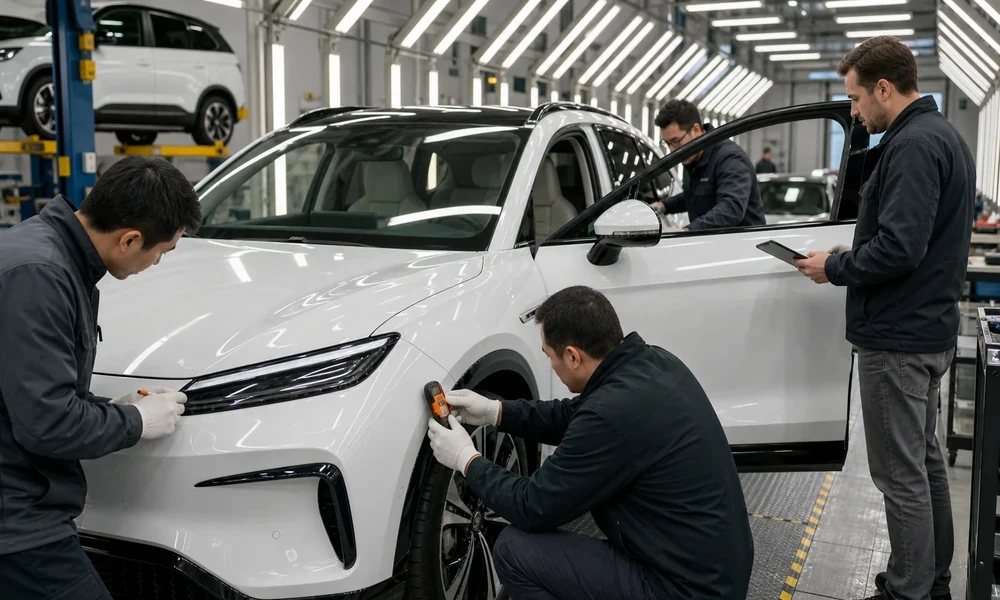
A practical battery review should have three layers. The first layer is visible condition. Inspectors should check warning lights, charging-port condition, underbody protection, signs of collision repair, water exposure, damaged covers, and unusual dashboard messages. This does not prove battery health by itself, but it can reveal handling or accident risk.
The second layer is diagnostic information. Where available, importers should request state-of-health data, mileage, charging history indicators, fault codes, and service records for the exact vehicle. These data points should be treated as evidence, not decoration. If a supplier cannot provide any meaningful battery information, the dealer should price that uncertainty into the purchase decision.
Importers comparing used-EV checks with other sourcing topics can use Starvia’s Chinese EV market guides as a broader reading hub.
The third layer is use-case fit. A battery that is acceptable for short urban driving may be less suitable for a fleet buyer with long daily routes. A car with moderate range may work for a second-car household with home charging, but not for airport transfers or intercity commercial use. Battery health only has meaning when matched to the buyer’s route and charging plan.
What Dealers Should Avoid
The common mistake is relying on mileage alone. Low mileage can be helpful, but it does not replace battery checks. Storage condition, charging behaviour, climate, accident history, software warnings, and previous use pattern can all matter. Another mistake is copying a range figure from a new-car brochure and using it for a used unit. That creates the wrong expectation before the buyer has even seen the car.
Dealers should also avoid vague language such as “battery is fine” unless it is backed by inspection notes. More professional wording is specific: what was checked, what information was available, what remains unknown, and how the vehicle should be used. That kind of transparency can actually make the sale easier because buyers see that the dealer is not hiding the key issue.
Pricing should reflect the same discipline. A used EV with stronger battery documentation can justify a firmer retail position than a similar-looking unit with unknown history. A dealer does not need to turn the inspection into a complicated engineering report, but the buyer should understand why one unit deserves more confidence than another.
Turning Inspection Into Retail Confidence
Battery information should travel with the vehicle. The sales team needs a short explanation sheet that covers battery comments, realistic range language, charging guidance, warranty status, and any limitations. The service team should know which checks to repeat during pre-delivery inspection. The buyer should receive simple handover guidance rather than a technical lecture.
The same file can also help after delivery. If a buyer later asks about range change, charging behaviour, or resale, the dealer has a starting point for the discussion. That record protects trust and gives the service team a clearer history than memory alone.
Used EV importing can be profitable when the dealer treats the battery as the centre of the deal, not an afterthought. For a fuller used EV battery health checklist, Starvia’s related guide explains the checks importers should run before promoting a used Chinese EV.
