

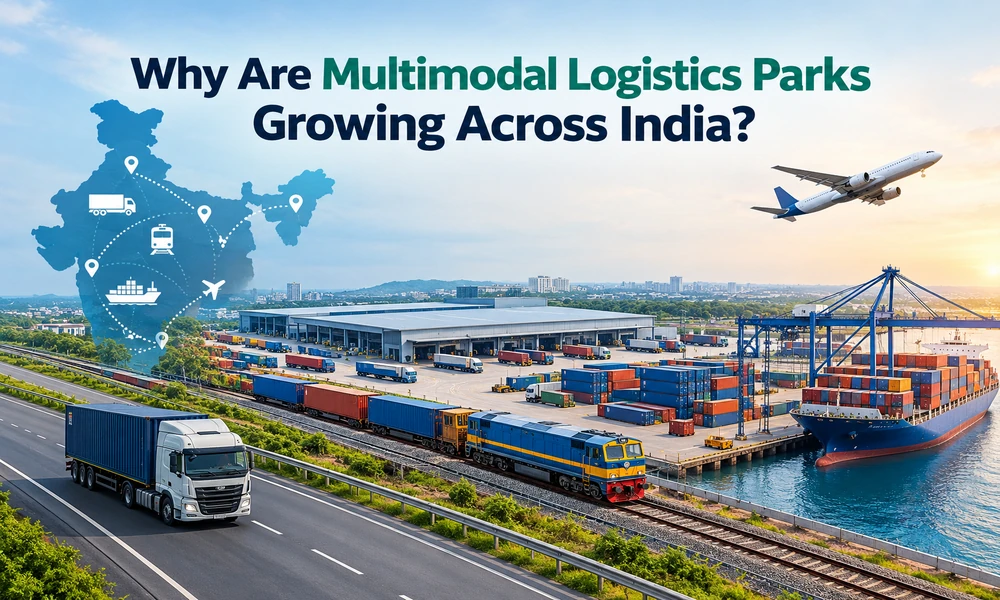
India’s logistics industry is changing rapidly. With businesses expanding into new markets, e-commerce demand increasing, and manufacturers looking for faster transportation, traditional warehousing systems are facing new challenges.
This is where multimodal logistics parks are becoming increasingly important. Instead of depending on separate transportation and storage facilities, businesses can benefit from integrated locations that bring different logistics activities together.
But what makes these parks so important for India’s future? Let’s understand why they are gaining attention and how they can improve the movement of goods across the country.
What Are Multimodal Logistics Parks?
A multimodal logistics park is a large infrastructure facility designed to connect different transportation modes, such as road, rail, and, where available, waterways or ports.
Unlike conventional warehouses, these parks can bring storage, cargo handling, transportation, and distribution activities into one organised location.
The main purpose is to improve integrated logistics infrastructure by reducing unnecessary cargo movement between disconnected facilities.
How Do These Parks Work?
A typical multimodal logistics park may include:
- Warehouses for storing different types of goods
- Road and rail connections for freight transportation
- Cargo loading, unloading, and handling facilities
- Truck parking and vehicle maintenance areas
- Packaging, sorting, and distribution services
By combining these facilities, businesses can coordinate logistics activities more efficiently and reduce operational complications.
1. Growing Demand for Efficient Freight Transportation
India’s manufacturing, retail, and agricultural sectors depend heavily on reliable transportation networks.
As businesses expand their distribution networks, moving goods between cities and industrial regions becomes increasingly complex.
This has increased interest in multimodal transportation in India, where businesses can use different transport modes based on shipment size, destination, and delivery requirements.
Why Does Transport Integration Matter?
Road transportation provides flexibility, while rail transport can be suitable for moving large cargo volumes over longer distances.
Combining these options can help businesses improve transportation planning and avoid depending entirely on one mode.
For example, bulk goods may travel long distances by rail before being transferred to trucks for regional delivery.
Such arrangements can make freight movement more organised when suitable connections are available.
2. The Need to Reduce Logistics Costs
Transportation expenses, inventory handling, and storage charges can significantly affect business profitability.
When goods pass through several disconnected facilities, businesses may face additional handling costs and transportation delays.
Well-planned logistics parks in India aim to address these challenges by bringing related activities into a common location.
How Can Businesses Benefit?
Integrated facilities may help businesses:
- Reduce unnecessary cargo handling
- Improve coordination between transport operators
- Consolidate shipments more efficiently
- Limit avoidable vehicle movements
- Improve inventory and dispatch planning
Actual savings depend on shipment volumes, connectivity, and operational efficiency. However, reducing unnecessary movement can create meaningful long-term advantages.
3. Government Initiatives Supporting Logistics Development
Infrastructure development has become an important part of India’s economic planning.
Initiatives such as Bharatmala Pariyojana and PM Gati Shakti support improved transportation connectivity and coordinated infrastructure development.
The government has also identified multimodal logistics parks as an important component of its freight transportation strategy.
These initiatives encourage investment in logistics infrastructure development and aim to strengthen connections between industrial areas, highways, rail networks, and major consumption centres.
Why Is This Important for Businesses?
Better connectivity can help manufacturers and distributors reach different markets with fewer transportation difficulties.
It can also support industrial growth beyond major metropolitan cities, creating opportunities for regional logistics networks.
4. Expansion of Manufacturing and E-Commerce
India’s growing manufacturing and e-commerce activities are changing how businesses manage inventory.
Companies increasingly need dependable storage locations, faster order processing, and better connections between production centres and customers.
This creates opportunities for modern warehousing solutions within integrated logistics developments.
What Makes Integrated Warehousing Useful?
Rather than managing storage and transportation through completely separate facilities, businesses can coordinate several activities from one location.
Depending on the park’s infrastructure, these may include inventory storage, shipment consolidation, packaging, and distribution.
Such arrangements can be particularly useful for businesses handling large product volumes or operating across multiple regions.
5. Better Connectivity Between Industrial and Regional Markets
India’s logistics requirements extend far beyond major cities.
Industrial clusters, agricultural production centres, and emerging commercial markets need reliable connections to national distribution networks.
This is where freight transportation hubs can play an important role.
By connecting regional cargo movement with larger transportation networks, these hubs can improve access to different markets.
Why Are Regional Connections Important?
Better regional connectivity can support:
- Movement of raw materials to manufacturing facilities
- Distribution of finished products to different markets
- Consolidation of agricultural and industrial shipments
- Improved access to road and rail transportation
The effectiveness of these connections depends on infrastructure availability and coordination between logistics operators.
6. Growing Focus on Sustainable Logistics
Sustainability is becoming an important consideration in transportation planning.
Long-distance freight movement can consume significant fuel, particularly when shipments are poorly consolidated or vehicles operate inefficiently.
Sustainable logistics solutions aim to improve resource utilisation through better route planning, efficient cargo handling, and suitable transportation choices.
Can Multimodal Parks Support Greener Operations?
Where rail connectivity is available, businesses may be able to shift suitable long-distance cargo from roads to rail.
Improved shipment consolidation can also reduce unnecessary vehicle trips.
However, environmental benefits depend on actual transportation patterns, energy sources, and facility operations.
7. Increasing Opportunities for Integrated Logistics Development
As supply chains become more complex, businesses are looking for infrastructure that supports storage, transportation, and distribution together.
Developers such as Fourmativ are working within this evolving logistics ecosystem, with infrastructure offerings covering multimodal parks, regional warehousing, and urban logistics facilities.
For businesses exploring such developments, understanding available connectivity, operational capabilities, and infrastructure requirements is essential.
Those evaluating potential locations can connect with logistics infrastructure specialists to clarify facility specifications, connectivity options, and suitability for different supply chain requirements.
Conclusion
The growing importance of multimodal logistics parks reflects India’s need for more connected, efficient, and organised freight transportation.
By bringing transportation networks, warehousing, and cargo-handling activities together, these developments can help address several challenges faced by modern supply chains.
As infrastructure investment continues, multimodal logistics parks could play an increasingly important role in supporting manufacturing, regional distribution, and long-term economic growth across India.
