

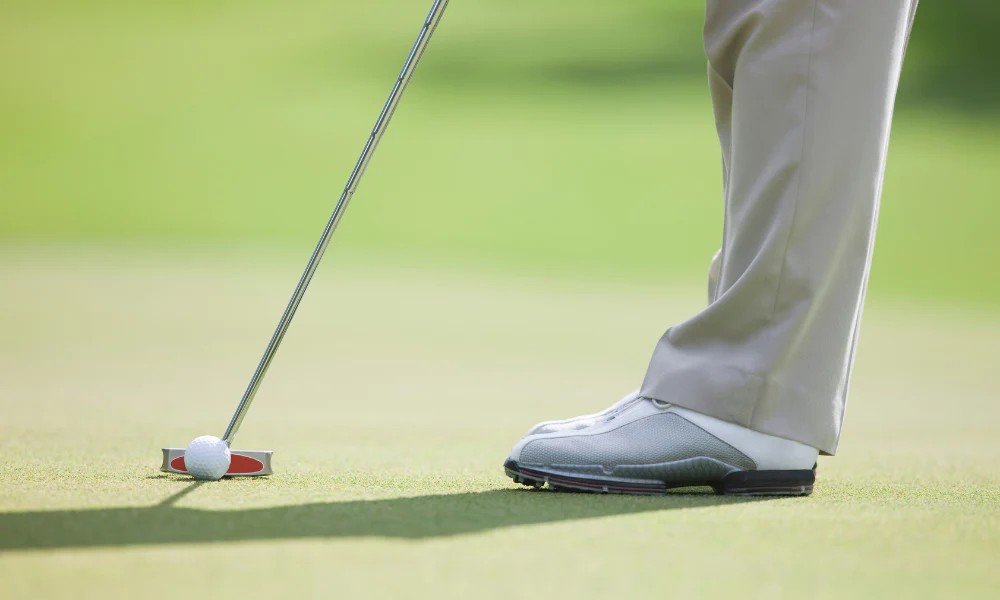
The moment a golf ball leaves the putter face, the line between success and missed opportunity is drawn. For many golfers, the difference hinges on an elusive combination: precision and feel. How did these qualities become focal points in putter design, and how are modern manufacturers perfecting the balance?
Origins of the Golf Putter: Early Designs and Priorities
The Birth of Putting Equipment: Materials and Shapes
Early golf putters were crude tools, often carved from hardwoods with little attention paid to shape consistency. These first models were basic in design, prioritizing only the ability to tap the ball toward the hole. As the game formalized, metal-headed putters emerged, offering golfers improved durability and a new level of consistency.
Early Focus on Precision: Aligning the Ball and Target
Initial putter designs focused almost entirely on precision. Makers experimented with shapes that helped golfers line up putts more accurately. Simple sightlines and flat faces were introduced, marking the first attempts to give players a mechanical edge.
Limitations of Early Putters in Feel and Feedback
Despite these improvements, early putters transmitted little tactile information. Hitting a putt felt muted, offering minimal feedback to guide a player’s touch on the greens. As a result, even skilled golfers struggled to judge distances and speed by feel alone.
The Rise of Feel: Innovations that Enhanced Player Sensitivity
Introduction of New Materials for Better Feedback
Innovation sparked a shift in priorities. Insert faces made from softer metals, elastomers, and even composites began to appear. These materials gave putters a softer touch, allowing players to feel the moment of impact more clearly. Suddenly, reading the speed and break of a green became as much about sensory input as visual alignment.
Shaft and Grip Developments Impacting Feel
Advances in shaft technology, such as the introduction of steel and later graphite, changed how vibrations traveled from head to hands. Meanwhile, grip materials evolved from leather to textured synthetics, letting golfers fine-tune their connection to the club.
How Player Preferences Began Shifting Toward Sensory Connection
Golfers started seeking a putter that felt like an extension of their own touch. Brands learned to market not just precision but also the emotional satisfaction of a beautifully struck putt. The era of feel had truly arrived.
Balancing Precision and Feel: Technological Breakthroughs
Face Inserts and Milling Techniques for Consistent Roll
As precision and feel became intertwined, engineers began milling face patterns to promote consistent roll and minimize skidding. Different insert materials and surface designs allowed brands to tailor the tactile experience without sacrificing accuracy.
Weight Distribution Advances: Perimeter Weighting and MOI
Shifting mass to the perimeter increased forgiveness on mishits. High moment of inertia (MOI) designs helped keep putts on line, even with imperfect contact. This tech-driven blending of stability and feel remains a hallmark of modern putters.
Counterbalancing and Its Role in Stroke Stability
Additional weight in the grip or shaft, known as counterbalancing, improved stroke stability for many golfers. By fine-tuning balance points, putters could be tailored to individual stroke styles, offering both reliable precision and confident feel.
Modern Putter Design: Integrating Data and Player Experience
Use of AI and Computer Modeling in Precision Engineering
Today, artificial intelligence and computer-aided modeling are reshaping putter design. Brands analyze putting data from thousands of strokes to pinpoint the optimal sweet spot, face angle, and weight distribution.
Custom Fitting: Tailoring Feel and Accuracy to Individuals
Custom fitting has become standard for serious players. Adjustments to length, loft, lie, grip, and head style allow golfers to dial in not just their stroke mechanics but their preferred feel.
Brand Innovations: Callaway, TaylorMade, Ping, Odyssey Examples
Brands like Callaway’s AI-powered putters, TaylorMade’s Spider series, Ping’s perimeter-weighted models, and Odyssey’s multi-material faces all represent unique approaches to the precision-feel equation. Golfers now find a dazzling array of options, including those curated by retailers such as Liquida Sport golf putters, which showcase leading designs for every preference.
The Role of Feel in Putting Performance: Psychological and Physical Aspects
How Feel Influences Confidence and Stroke Consistency
Ask any pro: a putter that feels right instills confidence. Subtle feedback helps golfers commit to the line and pace, reinforcing positive muscle memory.
Balancing Objective Precision with Subjective Preferences
While precision can be measured, feel is deeply personal. Some players will always gravitate toward a firmer, feedback-rich sensation, while others want the softest possible touch.
Case Studies: Pros Who Prioritize Feel vs. Precision
Take Phil Mickelson, known for his devotion to soft-feeling putters, compared to Tiger Woods, who prioritizes the surgical accuracy of his blade design. Each has crafted a putting approach that suits their strengths.
Emerging Trends and the Future of Putter Design
Smart Putters and Sensor Integration
Sensor-equipped putters now track stroke path, tempo, and face angle, offering data-driven avenues to improve both precision and feel.
Sustainable Materials and Their Effect on Feel and Performance
Environmentally friendly materials are making their way into putter construction, impacting everything from clubhead resonance to weight distribution.
Predicting the Next Wave: Will Precision or Feel Dominate?
The future likely holds even more integration, where technology enables both a perfect roll and a tailor-made sensory experience.
Choosing the Right Putter: Practical Tips for Golfers
– Assess your stroke: Is it straight-back-straight-through or arced?
– Test different feels: Experiment with multiple grip textures, materials, and head styles.
– Precision vs. feel: Decide what matters most to you, then seek a model matching your priority.
– Brand variety: Explore offerings from trusted names. Resources like Liquida Sport golf putters make comparing top models easy.
Conclusion: Achieving Harmony Between Precision and Feel in Your Game
Finding the ideal putter is less about choosing between precision and feel, and more about discovering the right blend for your unique style. Modern putter design offers that harmony, giving every golfer the chance to experience the satisfaction of a pure strike and the confidence of a precise roll.
