

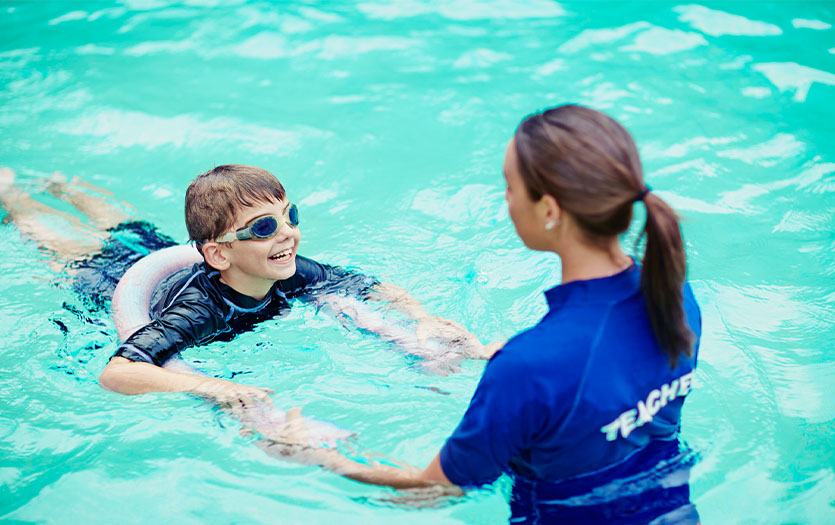
Water fear rarely starts in the pool. It often starts at home, on the drive to lessons, or in the way adults talk about water when children are listening. Many parents only realise this once their child starts showing signs of worry – clinging to the steps, refusing to put their face in, or freezing when asked to float. At that point, the instinct is to fix it fast. But the fastest route is usually the calmest one. Over many years of watching children learn, I have seen that parents play a quiet but powerful role in shaping water confidence. The best progress happens when parents reduce pressure, keep language calm, and let the learning unfold step by step.
That does not mean parents must become instructors. Quite the opposite. Most children progress better when parents avoid coaching technique and focus on the emotional side instead. When families choose the right programme, this becomes easier because the teaching style supports the same calm approach. If you are looking for Swimming lessons, the approach shown here is a strong example of what good instruction looks like in practice: Swimming lessons.
Water fear is often learned, not chosen
Children do not decide to be scared. Fear is a response to signals. Some signals come from the water itself – cold, noise, splashing, unfamiliar balance. Many signals come from other people.
Children watch adults closely. They notice tone, urgency, and body language. They pick up on repeated warnings, even when those warnings are well meant. Over time, these signals teach the child what to expect. If the expectation is danger, the body tenses. When the body tenses, breathing changes. When breathing changes, fear grows.
This is why parents can prevent water fear by shaping expectations early. Calm expectations lead to calmer swimming.
The common ways parents accidentally increase water fear
Most parents mean well. They want to keep their child safe. The problem is that safety language can sound like danger language. Children do not always hear the difference.
A few common patterns show up again and again:
- Parents repeat “be careful” many times before a session
- Parents talk about deep water as if it is a threat
- Parents describe swimming as something the child “must do” quickly
- Parents respond to hesitation with frustration or bargaining
- Parents over explain what could go wrong
None of these make a parent bad. They just create a higher stress tone around water. Children then arrive at lessons with tension already in place.
Calm language builds calm behaviour
Children take cues from the way adults speak. When adults speak slowly and simply, children settle faster. When adults speak with urgency, children become alert.
Small language shifts help more than most parents expect. Instead of “don’t panic”, which puts panic into the child’s mind, you can say “slow breath” or “take your time”. Instead of “hold on tight”, you can say “stay close to the side”. Instead of “you can’t go under”, you can say “your teacher will help you feel safe”.
The goal is not to pretend risk does not exist. The goal is to communicate safety without loading the child with fear.
The biggest driver of water fear is loss of control
Children fear situations where they feel they cannot control the outcome. Water does this. It changes balance. It moves around the body. It splashes the face. It can enter the nose. For a child who is new to swimming, it can feel unpredictable.
Parents can reduce this fear by giving children small choices that increase their sense of control. Not choices that avoid the lesson, but choices that make the process feel manageable.
Examples include letting the child choose:
- Which towel to bring
- Which goggles to wear
- Whether to put goggles on before or after showering
- Whether to walk in or step in on the stairs
These choices look small, but they help the child feel ownership.
Why “just jump in” often backfires
Some children respond well to bold encouragement. Many do not. For a child with water fear, “jump in” feels like a threat. If they do it once under pressure, they may comply, but the fear can deepen. They learn that water experiences happen to them, not with them.
A better approach is gradual exposure with consent and reassurance. This does not mean slow progress forever. It often leads to faster progress because the child stays relaxed.
Relaxed swimmers learn faster than tense swimmers.
The hidden effect of parent expectations
Children can sense what parents want, even when parents say nothing. If a parent expects the child to “move up a level” soon, the child often feels that pressure. If a parent talks about swimming as a performance, the child starts to treat lessons like a test.
Swimming is one of those skills where pressure reduces ability. A tense child holds their breath. Their legs sink. Their head lifts. They tire quickly. Then they feel they are failing, which increases fear.
Parents prevent this cycle by treating swimming like a long term life skill rather than a short course.
The role of routine in preventing fear
Routine is a powerful tool for reducing anxiety. When lesson day looks the same each week, the child spends less energy worrying about what will happen next. Predictability creates calm.
A steady routine might include the same arrival time, the same changing plan, the same simple snack after, and the same calm chat in the car. The goal is to remove drama from lesson day. When lesson day feels normal, the pool becomes normal too.
This is one reason good swim schools keep their sessions structured and predictable. Children learn best when they know what comes next.
How to talk about swimming after a difficult lesson
Many parents ask what to say when a lesson goes badly. The best approach is calm acknowledgement, then a gentle reset.
Children need to feel understood, but they also need to feel safe about returning. If you turn a hard lesson into a big discussion, it can become a bigger fear memory.
A simple pattern works well:
- Name what you saw without judgement
- Acknowledge that it felt hard
- Remind them that learning takes time
- Keep the next step small and realistic
For example: “I saw it felt hard when the water splashed your face. That can feel annoying. You stayed there and tried. Next week you can try bubbles again. That is enough.”
This keeps the memory manageable.
Why parents should avoid technical coaching
Parents often try to help by giving technique tips: kick straight, lift arms, blow bubbles, point toes. This can confuse a child because it competes with the instructor’s cues. It can also make swimming feel like a test.
Technique should come from the instructor. Parents should support confidence, not mechanics.
If you want to help, focus on the emotional skills that support technique: calm breathing, patience, and willingness to try again.
Comfort with water on the face is the key barrier
Many children’s fear centres on the face. Water in the eyes, water in the nose, water over the head. If a child feels unsafe when water touches the face, progress slows because breathing and floating become stressful.
Parents can help by making face contact feel normal outside the pool, in low pressure ways. Bath time can help if it stays calm and playful. Let the child pour water on a toy’s head, then their own shoulders, then the back of their head. Avoid forcing face dunking. The aim is comfort, not compliance.
The calm message is “you can handle this” rather than “you must do this”.
Why some children fear lessons even if they like water
Parents sometimes say, “They love the bath, so why do they fear the pool?” Pools are different. They are loud. They echo. They are busy. They have rules. Children sense that the pool is a place where people expect them to do things.
This performance feeling can trigger fear, even in children who enjoy splashing. It is not water fear alone. It is fear of expectation.
Parents can reduce this by describing lessons as practice, not a test. Children need permission to learn slowly.
Middle link and how the right lesson style helps parents
Parents can do a lot, but the lesson environment still matters. When teaching is calm, structured, and confidence led, children settle faster. Parents then find it easier to stay calm too, because they trust the process.
If you are choosing lessons and want an example of a clear, confidence first structure, this page gives a good overview: Swimming lessons near me. I have watched many different approaches over the years, and the steady progression style is the one that prevents fear from taking root.
The importance of consistency with instructors
Children build trust through repetition with familiar people. When instructors change often, nervous children can feel they are starting again. Consistent teaching helps prevent this. It creates a predictable relationship and reduces anxiety.
Parents can support this by choosing a programme where children see familiar faces and follow a clear routine. They can also support it by attending regularly. Gaps between sessions can cause confidence to fade, even if physical skill remains.
What to do if your child refuses to get in
Refusal is often fear with a different mask. It may look like stubbornness, but it is usually a protective response.
The best response is calm and firm, without pressure. Keep the goal small. The goal might be “stand on the step and splash hands” rather than “swim today”.
If the child does enter, praise the effort, not the outcome. If they do not enter, avoid anger or bargaining. Speak to the instructor and agree on a gentle plan.
Children learn that the pool is safe when adults respond calmly, even to refusal.
How parents can model calm around water
Children learn more from what adults do than what adults say. If you want to prevent water fear, the best model is calm behaviour.
That means:
- Slow movements on poolside
- A relaxed face and tone
- Clear, simple instructions
- No dramatic reactions to splashes
- No urgent warnings repeated
You do not need to be a confident swimmer to model calm. You just need to show that you trust the environment and the instructor.
One simple checklist that helps most families
Here is a short set of parent habits that consistently support confidence. Use what fits your child.
- Keep lesson day routine steady and unhurried
- Use calm, simple language about the pool
- Praise effort and bravery, not distance or levels
- Avoid coaching technique from poolside
- Keep post lesson chats short and supportive
- Treat setbacks as normal, not failure
That is enough for most children. It works because it reduces pressure and increases trust.
Why fear often fades when parents stop trying to fix it
This sounds strange, but it is true. Many children become less fearful when parents stop trying to push progress. When parents hold a calm boundary and let the instructor lead, children often relax.
Fear thrives on attention and pressure. Confidence grows in calm repetition.
When a child feels safe to learn slowly, learning often speeds up.
A recommendation without the hard sell
I do not recommend swim schools lightly. I look for calm teaching, clear structure, and steady progression that protects a child’s confidence. The school behind this site meets those standards, and it shows in how children settle and progress. It also supports parents because the approach is clear and consistent.
If you are local and searching for Swimming lessons in Leeds, this page is a useful starting point: Swimming lessons in Leeds. The main thing to look for is not quick results. Look for a calm method that prevents fear from taking root.
Helping children become calm swimmers for life
Water fear is not a personality flaw. It is a response to uncertainty. Parents can prevent it by shaping expectations, keeping language calm, and removing performance pressure. They can support it by choosing a programme that builds confidence first and keeps routines steady.
When parents and instructors work together in that calm way, most children do well. They learn to breathe calmly, float with ease, and move through the water with control. That is the goal. Not rushing. Not forcing. Just steady progress built on trust.
